I Cracked a Molar Grinding in My Sleep — How I Stopped 4 Years of TMJ Pain in 9 Days
I Cracked a Molar Grinding in My Sleep. Then I Found Out My Dentist Had Been Treating the Wrong Thing for 4 Years.
$3,400 on TMJ specialists, two custom night guards, three rounds of Botox, and an MRI that found nothing — and the actual answer was a tissue nobody had ever mentioned to me.

By week two, I'd put it on in the morning and forget I was wearing it. That was the first time in four years I wasn't actively bracing my jaw.
I want to open with a sentence I read on Twitter last March that hit me harder than any specialist's diagnosis ever had:
"Unconsciously grinding all day at your desk then suddenly realizing your headache is from it."
— Anonymous X post, ~5,000 likes
That was me. Every day. For four years.
I was a marketing director with a clenched jaw, a 2pm tension headache that I'd started scheduling Advil around, and — by month thirty-something of this — a cracked molar from grinding so hard in my sleep that I'd shattered a tooth I'd never even had a cavity in.
My dentist, looking at the X-ray, asked the question I'd come to hate: "Are you under a lot of stress?"
I almost laughed in his face.
What four years of treatment actually cost me
I tried to be a good patient. I really did.
I did the night guard. The first one was $180 — a soft "boil-and-bite" from the drugstore that I spit out in my sleep within the first week. The second was $440 — a custom-fitted hard splint from my dentist that I gagged on every night for two months before giving up. Both ended up in the same drawer.
I did the TMJ specialist. Three consultations, a full panoramic, a referral for an MRI that came back clean ("nothing structural is wrong, your jaw joint looks healthy"), and a recommendation to "manage stress and continue using your guard." Bill: $840.
I did the Botox. Three rounds, six months apart. The first round was magical for about six weeks — I could chew without clicking, my headaches dialed down, my partner stopped asking me to stop grinding. Then it wore off. Round two was less effective. Round three, the provider said it sometimes works that way and maybe I should try a different injector. Total: $1,200 of my money for $600 of bruised relief.
I did the chiropractor. I did six sessions of jaw-specific physical therapy. I did three appointments with an osteopath my sister-in-law described as "literally a miracle worker." I bought magnesium glycinate. I tried mouth tape. I downloaded two different breathing apps. I started a stretching routine. I quit caffeine for six weeks.
- Drugstore night guards (2)$180
- Custom dental splint$440
- TMJ specialist + imaging$840
- Botox (3 rounds)$1,200
- Physical therapy (6 sessions)$420
- Osteopath (3 visits)$320
- Four years. Still clenching. Still cracking teeth.$3,400
By the fall of last year, my dentist was talking to me about a "custom mandibular orthotic" — a $1,200 retainer-like device that's supposed to slowly reposition your bite over six months. He said it was "the next step." I told him I'd think about it.
I went home, looked at my partner across the kitchen counter, and said: "I'm done. I can't do this anymore. None of this is working."
He said the thing that finally made me actually look: "You've been treating this like it's about your teeth. What if it's not about your teeth?"
The thing nobody told me in four years
What I learned that night — at 2am, in bed, on my phone, doing the kind of frustrated Google research that desperate people do — changed everything I thought I knew about my jaw.
Your jaw isn't just muscle. It's wrapped in fascia.
Fascia is the connective tissue that wraps every muscle in your body — including your masseter (the main jaw clenching muscle, the one that bulges when you grit your teeth). And in chronic-tension areas, that fascia gets stuck. Adhesions form. It loses its glide. The muscle underneath can no longer fully relax, no matter how many times you remember to "unclench your jaw" during the day.
Which means: every single thing I'd tried for four years had been treating the muscle. Or the tooth. Or the joint. Nobody had ever treated the fascia.
"Stretching doesn't fix fascia. It never did. Your body needs a system — not a routine."
— Post that went around X / Twitter, ~12,000 likes
The night guard prevents grinding but doesn't release the fascial adhesions underneath. The chiropractor adjusts the joint but doesn't unstick the connective web wrapped around it. Botox paralyzes the muscle for three months, but the underlying fascia stays locked — and the second the Botox wears off, you're back to square one with six hundred dollars less in your account.
I had been spending money trying to quiet a fire alarm. The fire was still burning.
"No one believed me"
The part of this story that doesn't show up on the receipt is the part where, somewhere around year two, I started to feel like I was making it up.
My MRI was clean. My dentist couldn't find anything mechanically wrong. The Botox provider had a polite suggestion that maybe I should "manage my anxiety better." After a while, you start to wonder if you're the problem.
One of the things that finally pulled me out of that hole was reading other people describing the exact same thing. A woman on Instagram with 2 million views on a single reel said: "Every time I would eat, my jaw would pop. No one believed me. Until one day, it locked closed." The comments were thousands of women going "this is me, this is me, this is me."
I read a Reddit thread from someone who'd spent $3,400 on TMJ specialists, Botox, and splints — almost my exact number, almost the same list — and finally written: "Nothing worked until I started fascia release on my neck and jaw. My clicking is 80% gone in 3 weeks."
I read a TikTok comment under a viral jaw release video that I haven't been able to stop thinking about since:
"I've got this tmj neck shoulder pain and nerve pain and really bad hip pain & instability I'm seeing a neurophysio physio hydrotherapy dentist on morphine and still in agony"
— Comment on a viral jaw release TikTok, punctuation preserved
On morphine. Still in agony. Six different specialists. That comment is exactly where I was headed.
What actually works
Fascia responds to heat plus sustained vibration. Not percussion (that's what massage guns do — too aggressive for the face). Not stretching (fascia doesn't elongate the way muscle does). Not deep pressure alone.
Heat softens the tissue. Sustained vibration breaks up the adhesions and restores glide. Held against the right point. For long enough.
Intraoral myofascial release on the jaw and masseter — called "life changing" by multiple users.
— Aggregated from X / Twitter fascia threads, March–May 2026
The problem is that doing this with your fingers for fifteen minutes a day is exhausting. So I looked for a device that could.
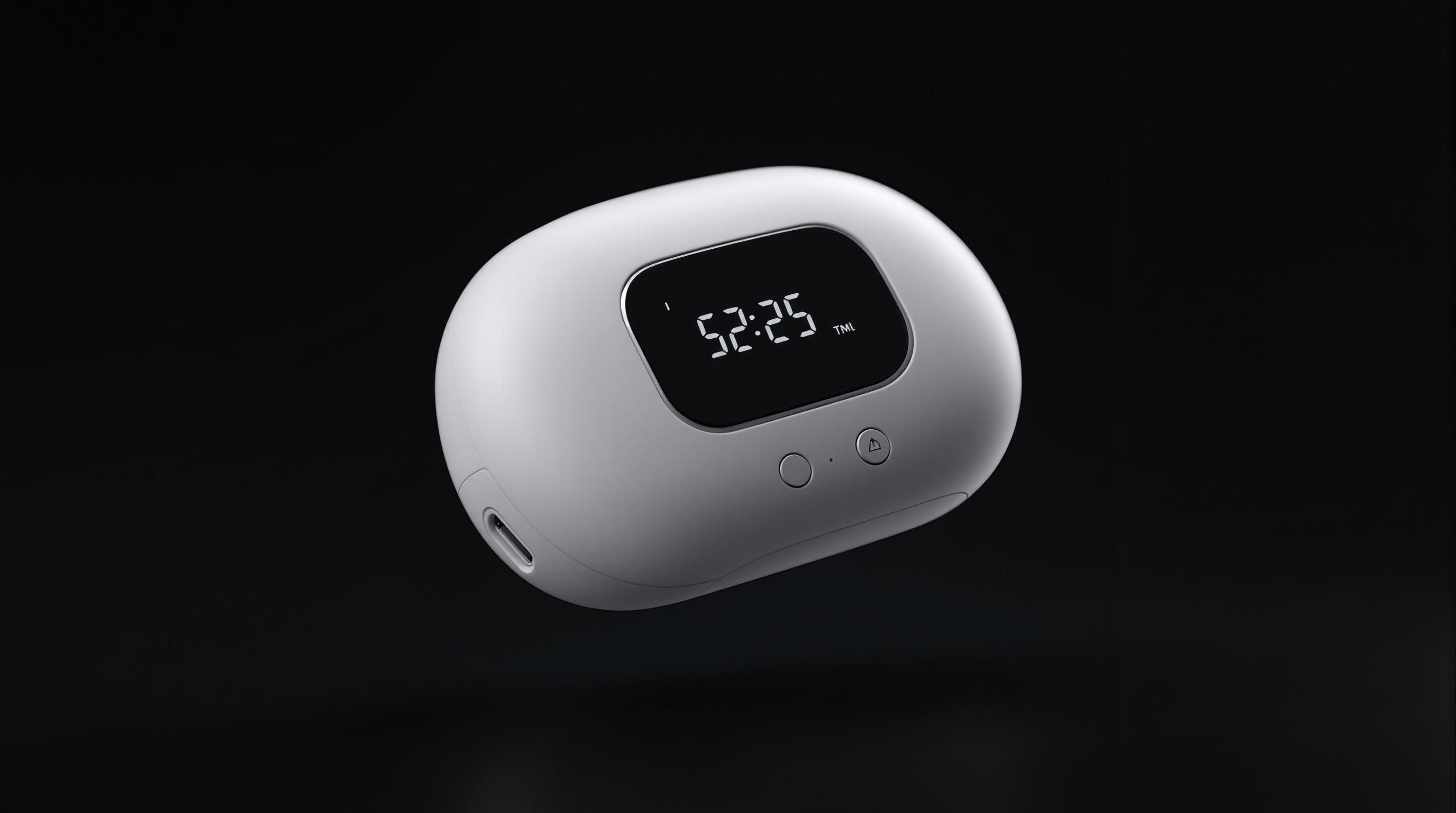
About the size of an AirPods case. Six modes of heat and sustained vibration. Sits hands-free against the masseter.
After two weeks of research, I ordered this one. Sits flush on the masseter hands-free, combines heat and six sustained vibration intensities, quiet enough that I forget I'm wearing it, 90-day no-questions-asked refund. It's $74 — less than I spent on a single Botox visit.
What changed, week by week
It didn't cure me. It just gave my jaw a way to actually let go.
Why I'm writing this
I'm not a doctor. I'm a marketing director who spent $3,400 over four years trying to solve a problem that turned out to be solvable for $74 because nobody — none of the medical professionals I paid — had ever once mentioned the word fascia to me.
The night guard industry isn't going to tell you. The dental orthotic specialist about to charge you $1,200 isn't going to tell you. The Botox provider definitely isn't going to tell you.
So I'm telling you. It's the fascia. Heat plus sustained vibration, hands-free, on the masseter, fifteen minutes a day, will probably do more for you in three weeks than four years of specialist visits did for me.
The device I ordered
If you've been where I was — failed night guards, failed specialists, an expensive next thing on the calendar — this is the one I'd start with. 90-day money-back guarantee, so trying it costs nothing if it doesn't work for your body.
See the Device →$74 · Ships in 24 hours · 90-day no-questions-asked refund